Native faba bean flour is increasingly used in food manufacturing for its ability to improve structure, binding, and water control – but its real value depends on how well variability is managed in production. In practice, many R&D and procurement teams discover the same issue: a material that performs well in trials can quickly become inconsistent at scale if sensory profile, particle size, and lot variation are not tightly controlled.
This article provides a practical, production-focused guide to faba bean flour functionality, specification, and supplier comparison, helping buyers secure repeatable performance – not just a compliant spec sheet.
What is native faba bean flour and how it behaves in production
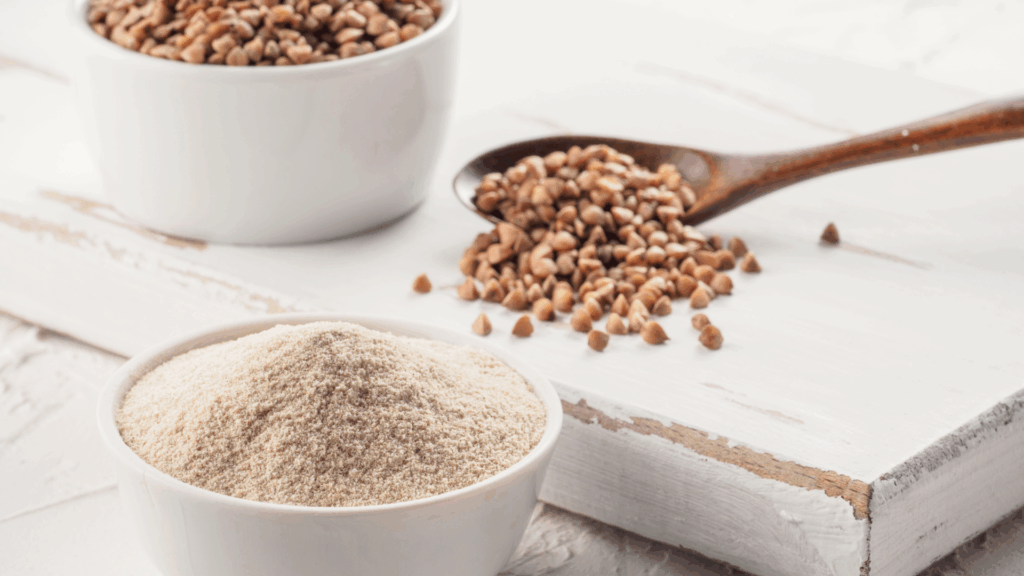
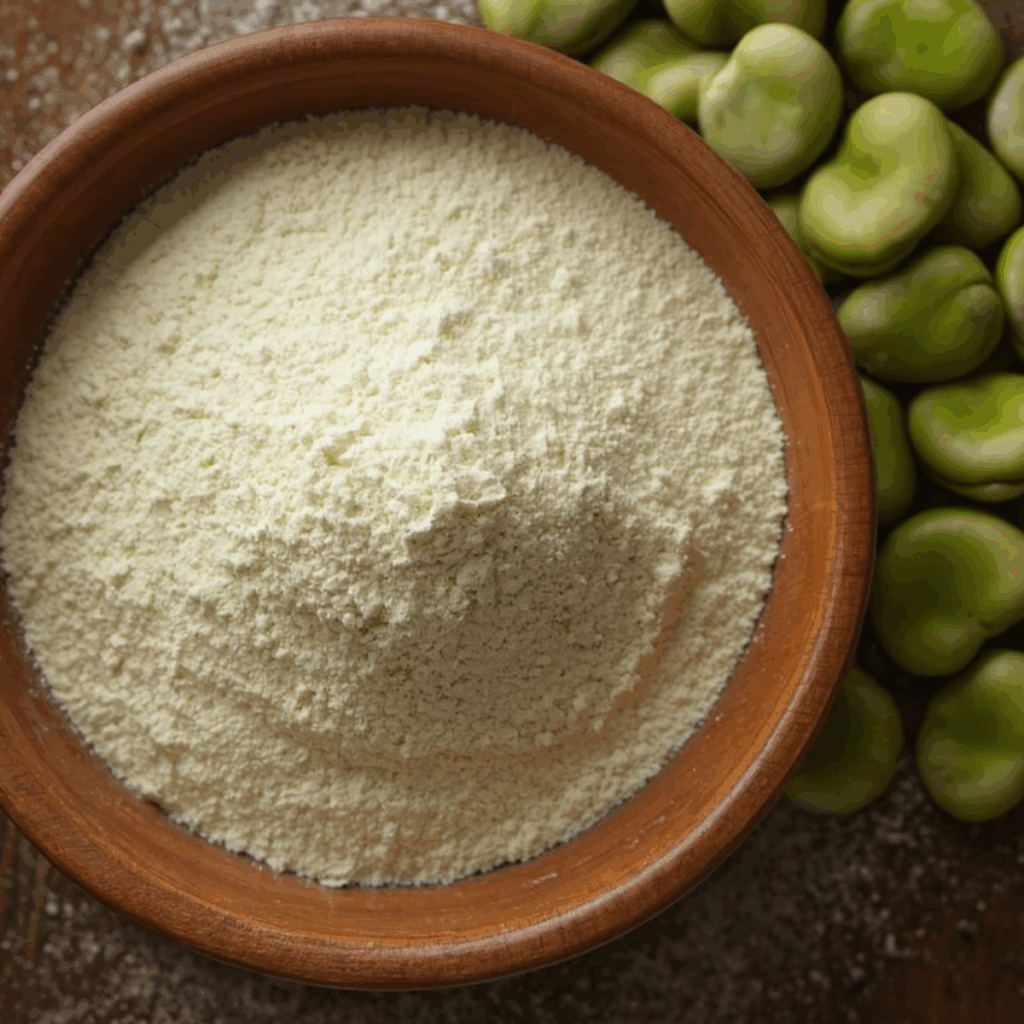
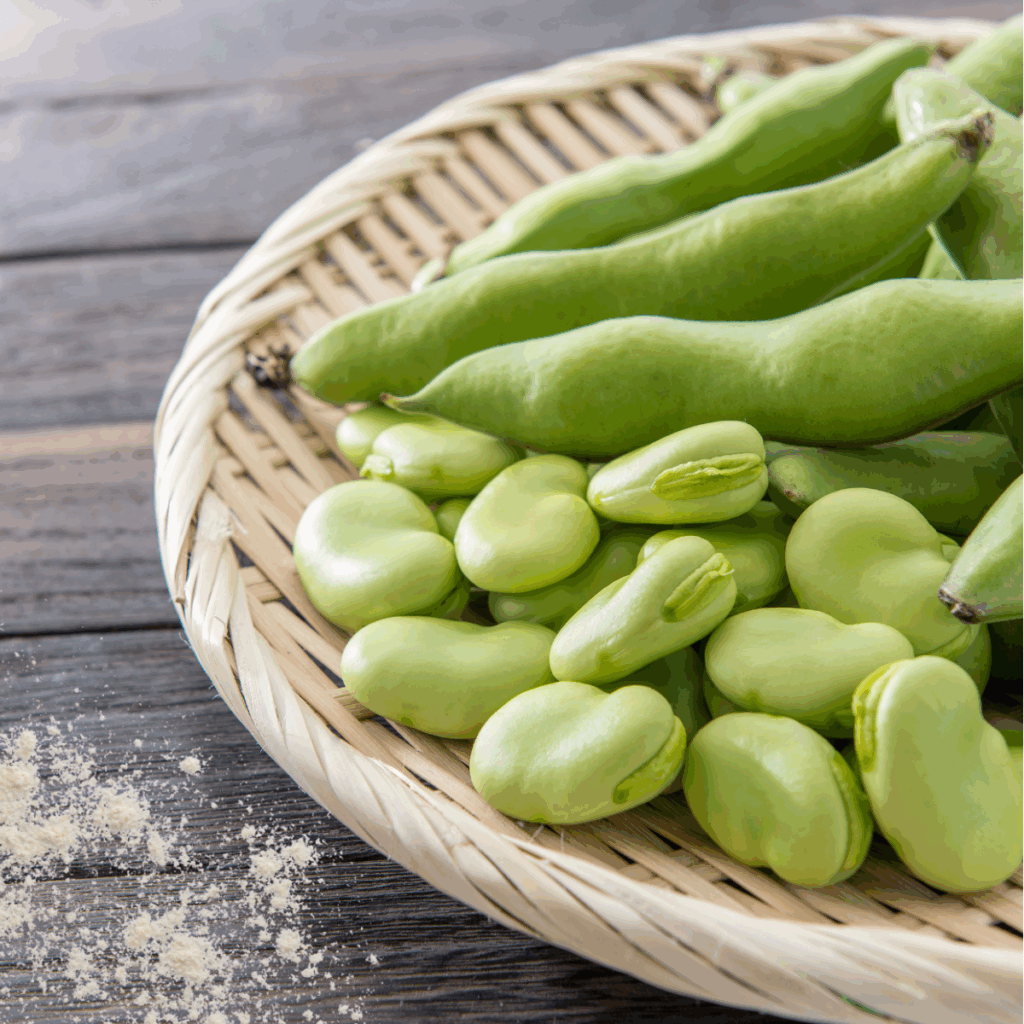
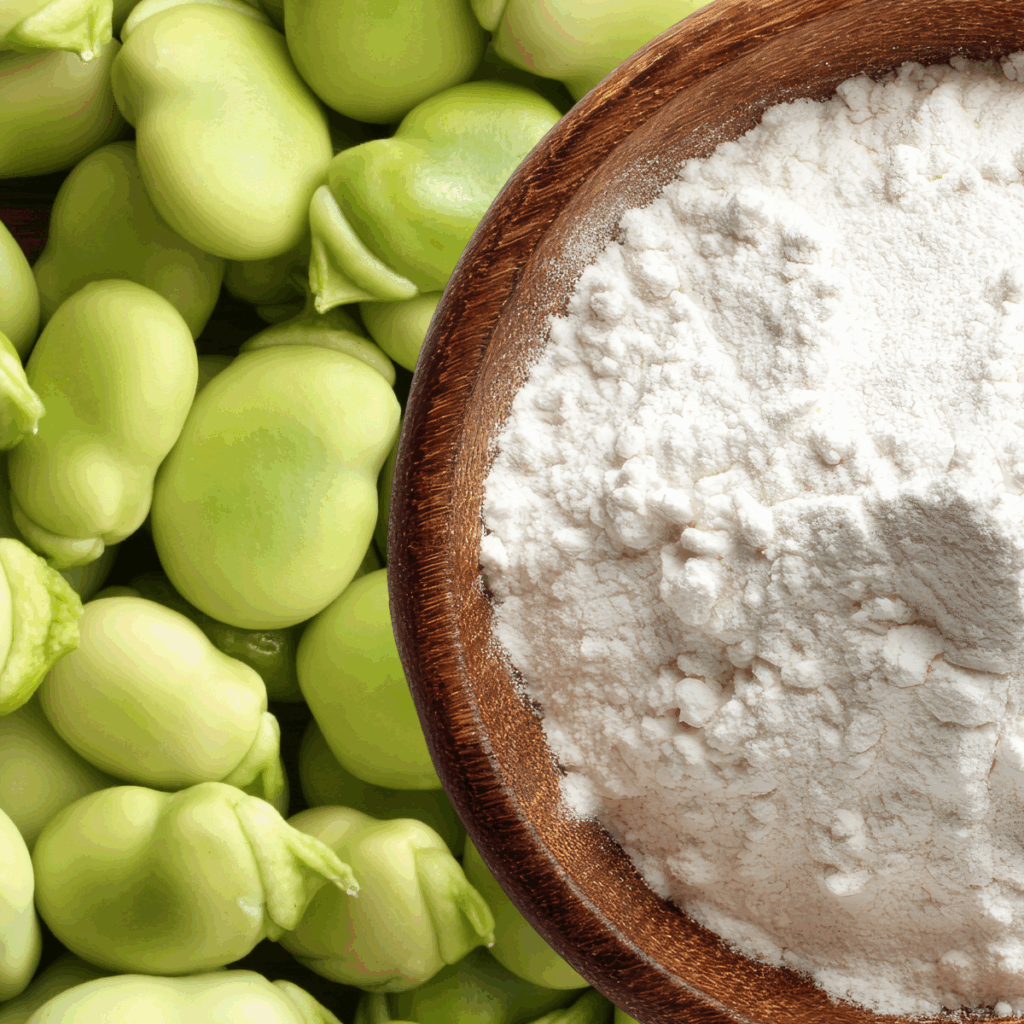
Faba bean flour is produced by milling faba beans (also called broad beans). “Native” means the flour is not pre-cooked or functionally modified (e.g. via extrusion). As a result, it behaves like a simply milled flour without additional processing.
From a production perspective, this has two implications:
- it offers strong functional potential,
- but it is more sensitive to raw material variability, particle size, and process conditions.
Related article: Extruded Flour: A Practical Guide for Food Manufacturing
Why buyer interest in faba bean flour is increasing?
Demand is not driven by a single trend, but by a combination of structural factors:
- diversification beyond pea and soy protein (most popular proteins available on the market),
- clean-label formulation strategies,
- need for functional ingredients that improve texture without complex additive systems
However, most manufacturers do not choose faba bean flour for protein claims alone.
They choose it for process performance and formulation stability.
Market reality: variability starts before processing
In the current European market, faba bean flour variability is strongly linked to origin, harvest conditions, and milling standards.
Buyers increasingly report differences in colour between lots, flavour intensity, and hydration behaviour, even when working within the same product category. In practice, this variability often becomes visible only at the production stage, where small deviations can shift process stability and final product quality.
From a sourcing perspective, this highlights a critical point: consistency is not only a formulation issue – it is a supply chain decision. Working with aligned suppliers and clearly defined specifications allows teams to manage variability earlier, reducing the risk of performance shifts long before the material reaches production.
How to define a workable sensory window
Native faba bean flour brings a characteristic flavour profile that needs to be considered in application design. Typical notes are beany, slightly vegetal, and mildly earthy, with intensity depending on raw material, origin, and processing conditions.
In practice, this is not a limitation but a parameter to be defined and aligned early in development. When sensory expectations are clearly set and consistently evaluated, the ingredient performs predictably across batches and applications. This typically involves working with a reference sample, defining acceptance thresholds, and aligning evaluation methods between R&D and procurement.
Functionality in practice: what faba bean flour actually does
In production, native faba bean flour is selected for how it behaves in the process – not just for its compositional values.
One of its key characteristics is water binding capacity, which directly affects viscosity and texture. It can improve structure and stability, but it also tightens the process window. Without proper hydration adjustment, this often results in thicker doughs, unstable batters, or viscosity drift in sauces.
From a structural perspective, it supports cohesion and product integrity across a range of applications, particularly in gluten-free and hybrid systems where maintaining bite is critical.
At the same time, texture outcomes are highly dependent on process alignment. If hydration, mixing, or particle size are not properly managed, the result is often dryness or a floury mouthfeel.
In most cases, this is not an ingredient issue – it is a formulation and process alignment issue.
Where faba bean flour works best
Native faba bean flour performs best in applications where functionality matters more than absolute flavour neutrality. It is commonly used in:
- bakery and gluten-free applications (structure and water control),
- snacks and coatings (with controlled hydration),
- soups, sauces, and ready meals (after viscosity curve testing),
- plant-based and hybrid products (binding and water management),
- selected pet food formulations where process stability matters.
The starting point is always the same: how sensitive your product is to taste and colour.
What to control in sourcing to ensure repeatability
Consistency starts before production. Native faba bean flour is sensitive to variability, but that variability becomes manageable when sourcing is structured and aligned with application needs.
The key parameters include:
- particle size and granulation
- moisture range
- sensory profile
- behaviour in your formulation
Natural components such as vicine and convicine may also become relevant at higher inclusion levels. They are not always a limitation, but should be assessed early during development.
Microbiology is another practical factor, especially in low kill-step applications. In these cases, performance depends on supplier control and process stability And often overlooked: storage.
Poor storage conditions or weak lot rotation can shift both functionality and sensory over time, even with a strong supplier base.
Buyer checklist: how to compare suppliers
Most teams compare specifications. Fewer compare performance. That is where problems start. A practical approach:
- Align the base spec: Particle size, moisture, protein, microbiology – always in relation to your application.
- Lock the sensory baseline: Reference sample, acceptance thresholds, clear rejection criteria.
- Validate functionality internally: Hydration, viscosity, behaviour under real process conditions.
In short, you are not buying “flour”. You are buying performance in production.
Key takeaway for R&D and procurement
Native faba bean flour delivers strong functionality: water control, binding, and structure across multiple applications. It works well in bakery, snacks, sauces, and plant-forward formulations. But it is spec-driven. Success depends on three things: sensory control, lot consistency and supplier alignment.
When procurement and R&D are aligned, native faba bean flour becomes a reliable tool.
FAQ
1) What is faba bean flour?
A flour milled from faba beans (broad beans), used as a functional and protein ingredient.
2) What does “native” mean in native faba bean flour?
It means the flour is not pre-cooked or functionally modified (for example by extrusion). it behaves like a simply milled flour without additional processing.
3) Does faba bean flour have a strong taste?
It can. Beany or green notes are common and should be controlled through sampling and acceptance thresholds.
4) What are the main applications for native faba bean flour?
Bakery and gluten-free, snacks/coatings, sauces/ready meals, plant-based and hybrid products, and selected pet food uses, and more.
5) Can faba bean flour replace pea flour?
It depends, but it is not a 1:1 swap. Expect differences in taste, colour, and hydration behaviour.
6) What should procurement request to compare suppliers?
Particle size, moisture, protein method/range, micro targets, and a defined sensory baseline, plus functional testing in your matrix.
7) Why does lot behaviour vary?
Crop, season, milling and processing conditions drive variability. Native flour is sensitive to those factors.
8) Is native faba bean flour suitable for clean label?
Often yes. Final labelling depends on the full recipe and market.
9) Is faba bean flour used in pet food?
Yes, in selected formulations where functional behaviour and consistency matter.
10) How should R&D start validation?
Benchmark 2–3 samples, run hydration and viscosity tests with your own methods, then trial under realistic process conditions.
Source: