Plant proteins have become one of the most dynamic ingredient categories in the global food industry. Their growing importance is no longer driven solely by nutritional trends. Today, manufacturers expect protein ingredients to improve texture, support process stability and contribute to the overall performance of finished products.
As formulations become more advanced, selecting the right protein is no longer about achieving the highest protein content. Different protein sources behave differently during processing and influence texture, water binding, emulsification and sensory properties in unique ways. The right choice depends on the application, production technology and the characteristics of the final product.
This shift is changing how manufacturers approach product development. Instead of asking which protein contains the most protein, R&D teams increasingly ask which protein delivers the functionality their formulation requires. Understanding these differences has become essential for developing products that are consistent, scalable and commercially successful.
Why Plant Proteins Have Become Strategic Ingredients
Plant proteins are now used across a wide range of food categories, including meat alternatives, bakery products, snacks, dairy alternatives, beverages and nutritional foods. Their role extends well beyond protein enrichment. They influence product structure, improve processing performance and help manufacturers develop products that meet changing market expectations.
At the same time, food manufacturers are looking to diversify their ingredient portfolios. While pea protein remains one of the most widely used options, interest in ingredients such as faba bean, chickpea, hemp, sunflower and pumpkin protein continues to grow. Each offers different functional characteristics and creates new opportunities for product development.
As a result, plant proteins have become strategic formulation ingredients rather than simple nutritional components.

Not All Plant Proteins Perform the Same Way
One of the biggest misconceptions about plant proteins is that they can be used interchangeably.
In reality, every protein source offers a different combination of functional properties. Some proteins provide excellent water-binding capacity, while others perform better in emulsification, texture development or process stability. Flavour profile, colour, solubility and particle size can also influence the behaviour of the ingredient throughout production.
For this reason, successful formulation starts with understanding the technical challenge rather than comparing protein percentages. Selecting the right protein means matching its functionality to the intended application, whether the goal is improving texture, increasing stability or creating a cleaner ingredient declaration.
Related article: Food Fibers in Food Industry: Not All Fibers Work the Same Way
Functional Properties Define Protein Performance
When food manufacturers evaluate plant proteins, protein content is only one part of the equation.
The real value of a protein ingredient lies in how it performs during processing and how it influences the characteristics of the finished product. Depending on the formulation, manufacturers may prioritise texture, emulsification, water-binding capacity, solubility or processing stability. These functional properties often have a greater impact on product quality than the protein percentage declared in the specification.
Understanding these differences helps R&D teams select ingredients that support both production efficiency and product consistency. Instead of adapting a formulation to fit an available protein, manufacturers increasingly look for proteins that match the technical requirements of the application.

Different Protein Sources, Different Functional Strengths
Every plant protein brings its own combination of functional characteristics.
Protein ingredients derived from peas and faba beans are widely recognised for supporting texture and structure in high-protein formulations. Chickpea protein offers excellent versatility across a broad range of savoury and bakery applications. Rice protein is often selected where a neutral flavour profile is important, while hemp, pumpkin and almond proteins can contribute to product differentiation and premium positioning.
Sunflower, flaxseed, lupine and rapeseed proteins further expand formulation possibilities, allowing manufacturers to balance nutritional targets with technical performance. Rather than replacing one another, these ingredients complement different formulation strategies and product concepts.
For this reason, successful product development is rarely based on finding the “best” plant protein. It is about identifying the protein that delivers the required functionality in a specific application.
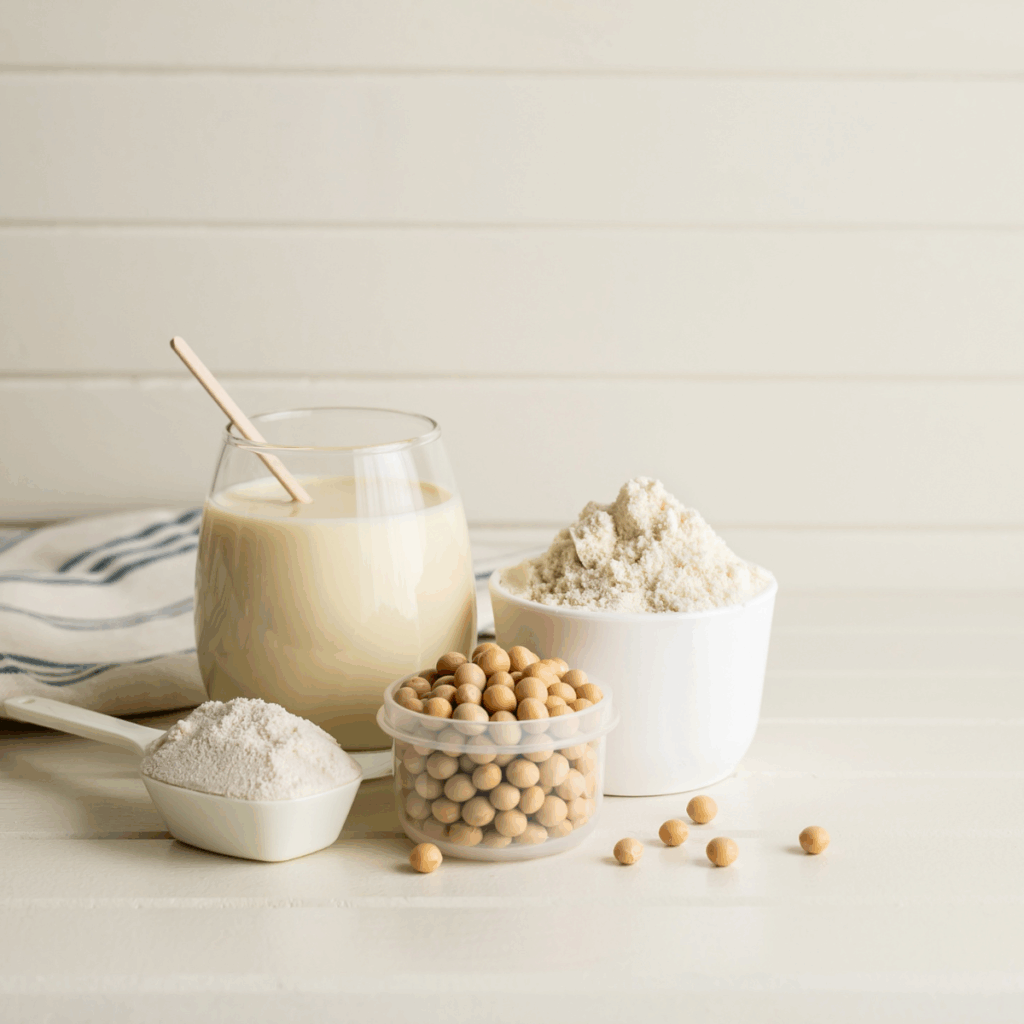
Selecting the Right Protein Starts with the Formulation
Choosing a plant protein should always begin with the formulation challenge rather than the ingredient itself.
A product requiring improved structure may need a different protein than a formulation focused on solubility or flavour neutrality. Processing conditions, ingredient interactions and the desired sensory profile all influence the final selection. Even proteins with comparable nutritional values can behave very differently during production.
As food formulations become more sophisticated, this application-first approach helps manufacturers reduce development time, improve process consistency and achieve more predictable production results.
What Food Manufacturers Expect From Protein Suppliers
Selecting the right protein is only part of the process. Consistent performance depends equally on the reliability of the supplier.
Food manufacturers expect protein ingredients to meet strict quality requirements, deliver consistent functional properties and be supported by comprehensive technical documentation. Variations in particle size, flavour profile, colour or processing behaviour can affect product quality and require costly formulation adjustments.
Beyond product specifications, manufacturers increasingly look for suppliers that provide transparent sourcing, verified production standards and reliable supply continuity. Quality assurance, traceability and technical support have become essential elements of long-term sourcing strategies.
As plant proteins continue to gain importance across the food industry, strong supplier partnerships help manufacturers maintain formulation consistency while responding more efficiently to changing market demands.
The Value of a Diversified Protein Portfolio
The plant protein market has evolved rapidly over the past decade. While pea protein remains one of the best-known ingredients, manufacturers are increasingly exploring alternative protein sources to achieve specific formulation goals.
This shift is driven by several factors. Product developers are looking for new functional properties, procurement teams want to diversify ingredient sourcing, and brands are searching for ways to differentiate their products in an increasingly competitive market. As a result, no single protein source is expected to meet every formulation requirement.
A broader protein portfolio gives manufacturers greater flexibility during product development. Instead of adapting a recipe to a limited selection of ingredients, they can choose proteins that best support the desired texture, processing behaviour, nutritional profile and product positioning.
Performance Is Built on Consistency
Developing a successful formulation is only the beginning. Maintaining consistent product quality over months and years depends on the stability of every ingredient used in production.
For protein ingredients, consistency means much more than meeting basic specification values. Manufacturers expect repeatable functional performance, reliable batch-to-batch quality and predictable behaviour throughout processing. Even small variations in flavour, colour or functionality can affect the final product and require unnecessary formulation adjustments.
This is why long-term supplier relationships are becoming increasingly important. Reliable sourcing, verified production standards and comprehensive quality documentation help manufacturers reduce risk, simplify procurement and maintain consistent product performance at scale.
Plant Proteins Continue to Expand Their Role
Plant proteins are no longer viewed solely as ingredients for plant-based products.
Today, they are used across a wide range of food formulations where functionality, nutritional value and processing performance are equally important. As manufacturers continue to develop more sophisticated products, the demand for diverse protein sources and application-specific functionality is expected to grow.
Rather than searching for a universal solution, successful manufacturers increasingly build formulations around ingredients that deliver the right technical performance for each application. Plant proteins are therefore becoming an essential part of modern product development—not because they replace other ingredients, but because they expand what manufacturers can achieve.
Innovation Starts with Ingredient Selection
The pace of innovation in food manufacturing continues to accelerate. Manufacturers are expected to develop products that deliver better nutrition, improved functionality and consistent quality while responding to changing consumer preferences and market trends.
Plant proteins play an increasingly important role in this process. They allow manufacturers to explore new product concepts, diversify formulations and create products with distinct nutritional and functional profiles. Rather than serving as simple alternatives to traditional ingredients, protein ingredients have become tools for innovation across multiple food categories.
This makes ingredient selection a strategic decision rather than a purchasing exercise. Choosing the right protein at the beginning of product development helps simplify formulation work, reduce technical challenges and support a more efficient route from concept to commercial production.
Reliable Protein Sourcing Supports Better Product Development
As plant protein applications continue to expand, manufacturers need suppliers who understand more than ingredient specifications.
Successful sourcing requires consistent quality, verified production standards and transparent documentation. It also requires an understanding of how different proteins behave in real manufacturing environments and how ingredient variability can influence formulation performance.
For procurement teams, reliable sourcing reduces supply chain risk and improves production continuity. For R&D teams, it provides confidence that formulations developed today will continue to perform consistently in future production.
Working with suppliers that combine technical knowledge, quality assurance and dependable sourcing helps manufacturers accelerate product development while maintaining the standards expected in today’s food industry.
Summary
Plant proteins have become far more than nutritional ingredients. Today, they are selected for the functionality they bring to food formulations, influencing texture, emulsification, water management, stability and overall product performance.
As manufacturers continue to diversify their ingredient portfolios, choosing the right protein is increasingly about matching functional properties with specific formulation goals rather than comparing protein content alone. Different protein sources offer different technical advantages, making ingredient selection an essential part of successful product development.
Reliable sourcing plays an equally important role. Consistent quality, verified suppliers and technical expertise help manufacturers maintain formulation stability, reduce development risks and build products that meet both market expectations and production requirements.
FAQ
What are plant proteins used for in food manufacturing?
Plant proteins are used to improve the nutritional value and functional performance of food products. Depending on the application, they can support texture, emulsification, water binding, stability and overall formulation performance.
Do all plant proteins perform the same way?
No. Different protein sources provide different functional properties. Pea, faba bean, chickpea, hemp, sunflower or rice proteins each behave differently during processing and are selected according to the needs of a specific formulation.
Why is protein functionality more important than protein content?
A high protein percentage does not guarantee good product performance. Manufacturers evaluate proteins based on properties such as texture, solubility, emulsification, water-binding capacity and processing behaviour to achieve the desired product quality.
Which industries use plant proteins?
Plant proteins are widely used across bakery, snacks, meat alternatives, dairy alternatives, beverages, ready meals, nutritional products and functional food applications.
How do manufacturers choose the right plant protein?
The selection process starts with the formulation objective. R&D teams consider functionality, flavour profile, processing requirements, ingredient interactions and the desired characteristics of the finished product before choosing a protein source.
Which plant protein sources are commonly used?
Food manufacturers use a wide range of protein ingredients, including pea, faba bean, chickpea, sunflower, hemp, pumpkin, rice, flaxseed, lupine, almond, peanut and rapeseed proteins. The most suitable option depends on the intended application and technical requirements.
What should buyers look for in a plant protein supplier?
Manufacturers typically evaluate suppliers based on product consistency, quality assurance, technical documentation, traceability, production standards and long-term supply reliability.
Why are manufacturers diversifying their protein sources?
Using a broader portfolio of plant proteins allows manufacturers to optimise functionality, reduce sourcing risks, explore new product concepts and respond more effectively to changing consumer expectations.
Can plant proteins be used beyond plant-based products?
Yes. Plant proteins are increasingly incorporated into conventional food products to improve texture, nutritional value and formulation performance, regardless of whether the final product is positioned as plant-based.
How does reliable protein sourcing support product development?
Reliable sourcing helps manufacturers maintain consistent ingredient quality, reduce formulation variability and ensure stable production over time. Working with verified suppliers also simplifies quality management and supports more efficient product development.
Source: