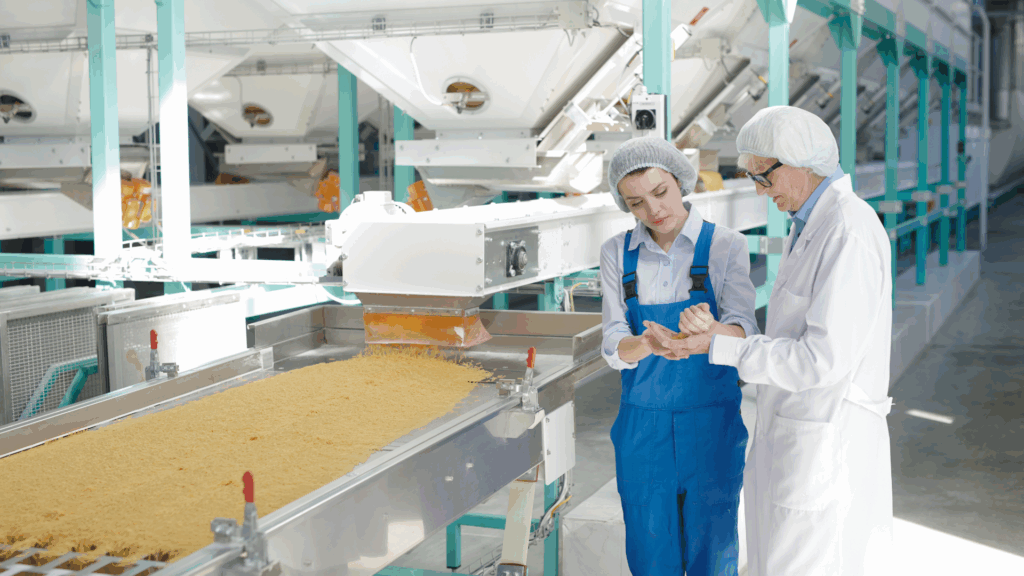
In global food trade, trust in a supplier cannot rely solely on declarations. Increasing demands from consumers, retailers, and regulatory authorities mean that food audits and supplier audits have become the foundation of building safe and transparent supply chains.
The absence of audits creates risks – from quality and food safety issues to financial losses, rejected import shipments, and even long-term image damage. As a result importers, producers, and traders must clearly understand which audits are required, how they differ, and which certifications are recognized in food markets.
This article serves as an evergreen reference guide on audits and certifications in the food industry – a resource for buyers and producers alike who seek reliable, structured knowledge on global quality standards.
What audits should your food supplier pass?
When evaluating a food supplier, it’s crucial to understand that audits are not uniform – they come in different types, each serving a distinct role in ensuring safety, transparency, and compliance. A robust audit system combines internal controls with external verification, giving buyers confidence in the stability of the supply chain.
Internal audits are carried out within the facility by the supplier’s own quality team. Their role is preventive and educational: they check compliance with standards such as HACCP or ISO, identify risks, and correct issues before they escalate. For example, a hygiene audit of the production line conducted monthly by the QA department helps maintain consistent safety practices.
External audits, on the other hand, are conducted by independent certification bodies, clients, or business partners. They not only verify compliance but also build credibility in the eyes of the market. Within this group, two major categories stand out:
Certification audits – formal assessments required to obtain internationally recognized certifications such as BRC, IFS, FSSC 22000, or ISO 22000. These audits follow strict criteria and are often a prerequisite for entering certain markets.
Client-side audits – performed directly by buyers at supplier facilities. Unlike certification audits, these provide first-hand insight into everyday practices and are increasingly used to prevent food fraud and strengthen long-term trust.
Regardless of type, the effectiveness of any audit depends on a well-prepared audit checklist. This should cover hygiene, HACCP and risk management, allergen control, traceability of every batch, and crisis procedures with proper documentation.
Key takeaway: Strong suppliers integrate both internal and external audits. Internal audits foster a culture of continuous improvement, certification audits open access to international markets, and client-side audits give importers practical assurance that a supplier delivers on its promises.

What certifications are recognized by GFSI and why do they matter?
In global food trade, a producer’s promise of good practices is not enough. To build trust and gain access to demanding markets, GFSI-recognized certifications are essential.
What is GFSI?
The Global Food Safety Initiative (GFSI) is an international organization that harmonizes different certification systems and sets common criteria for food safety. Thanks to this, an importer in Germany, a retailer in the UK, or a manufacturer in Canada can all trust that a certified supplier meets the same requirements, regardless of origin.
Key certifications recognized by GFSI:
- BRCGS (Brand Reputation Compliance Global Standard) – widely used in the UK and English-speaking markets. Strong focus on hygiene, product safety, and readiness for unannounced audits.
- IFS (International Featured Standards) – preferred in Germany, France, and Italy. Strong emphasis on documentation and strict process control.
- FSSC 22000 – based on ISO 22000, globally recognized, particularly in industrial and B2B sectors. Flexible and adaptable across categories.
- ISO 22000 – not always sufficient for retail importers but often forms the backbone of quality systems for B2B suppliers.
Why GFSI recognition matters:
- Market access – many retailers and major importers require GFSI-recognized certification.
- Risk reduction – such certifications cover HACCP, traceability, and risk management, lowering chances of quality crises.
- Trust building – clients receive assurance that the supplier meets globally recognized standards, not just local ones.
Insight: no single certification is “better.” The choice depends on market and distribution channels. Example: UK supermarkets almost always demand BRCGS, while German retailers prefer IFS. Global B2B players often lean toward FSSC 22000.
BRC vs IFS vs FSSC 22000 – which certification should I require from my supplier?
For buyers and importers, this question arises every time a new supplier is considered. All three: BRCGS, IFS, and FSSC 22000 – are GFSI-recognized and meet international food safety standards. The differences lie in focus and market preferences.
BRCGS (Brand Reputation Compliance Global Standard)
- Origin: UK
- Strongly required by UK retailers
- Focus: hygiene, readiness for unannounced audits, full transparency
- Must-have for suppliers targeting UK and Irish retail
IFS (International Featured Standards)
- Origin: Germany/France
- Preferred in Germany, France, and Italy
- Focus: documentation, process control, industry-specific audits
- Key for suppliers entering Western European retail chains
FSSC 22000
- Based on ISO 22000, extended with prerequisite programs (PRPs)
- Flexible, globally recognized
- Often chosen by B2B suppliers, semi-finished goods producers, and industrial facilities
- Easily integrated with other ISO systems (e.g., ISO 9001, ISO 14001)
Comparison table:
| Certification | Key Markets | Main Features | Best Suited For |
|---|---|---|---|
| BRCGS | UK, Ireland, Anglo markets | Hygiene, unannounced audits, transparency | Suppliers to UK/Anglo retail |
| IFS | Germany, France, Italy, Western Europe | Documentation, process control, industry-specific | Suppliers to DACH/FR/IT retail |
| FSSC 22000 | Global, B2B, industrial | Based on ISO 22000, flexible, integration with ISO | Global B2B producers, industrial suppliers |
Summary: no certification is universally superior. The right one depends on your target market. Choosing wrongly may block access to critical clients.
Key points in food safety audit checklists
Every food supplier audit should be based on a structured checklist. It ensures systematic evaluation of all facility areas and consistency when comparing different producers.
Core areas of a supplier audit checklist:
- HACCP & CCP monitoring – verifying implementation of HACCP and corrective responses.
- Traceability – ability to track every batch “from field to fork.”
- Allergen management – proper labeling, storage, and separation of allergens.
- Hygiene & sanitation – facility cleanliness, staff hygiene, pest control, disinfection.
- Raw material & supplier control – checking certifications and audits of input suppliers.
- Documentation & records – ensuring procedures are up-to-date and reflect practice.
- Non-conformity handling – documenting corrective actions and learning from issues.
- Transport & storage safety – proper conditions for export and storage.
Sample checklist table:
| Control Area | What is Checked | Why It Matters |
|---|---|---|
| HACCP & CCP | Implementation and monitoring | Prevents consumer health risks |
| Traceability | Batch coding and documentation | Enables rapid product recalls |
| Allergen management | Separation, labeling | Protects sensitive consumers |
| Hygiene practices | Clean lines, staff clothing, sanitation | Ensures food safety |
| Supplier control | Certificates, audits of raw material suppliers | Stabilizes quality and avoids contamination |
| Documentation | Procedures, logs, updates | Evidence of compliance |
| Corrective actions | Records of issues and resolutions | Builds reliability, prevents recurrence |
| Storage & transport | Temperature, humidity, pest control | Maintains product integrity |
Conclusion: an audit checklist is not just paperwork but a risk management tool. For buyers, it means confidence in suppliers and competitive advantage through safe, stable supply chains.

What are the consequences of skipping supplier audits?
Not auditing suppliers is one of the greatest risks in the food industry. Whether it’s a small functional food producer or a major exporter, skipping audits can lead to financial, legal, and reputational losses.
- Financial risks – rejected shipments due to non-compliance with sanitary standards or chemical residues can cost hundreds of thousands of euros. Additional costs include logistics, storage, and destruction of goods.
- Legal risks – EU, UK, and US food safety laws are strict. Importers introducing non-compliant goods risk fines, lawsuits, or bans.
- Reputation loss – buyers and retailers require audits and certifications. Failure damages trust and can take years to repair.
- Strategic risks – lack of audits increases vulnerability to food fraud, weakens traceability, and reduces crisis response capacity.
Skipping audits may look like saving money, but in reality, it’s a high-risk gamble with costs far exceeding the investment in proper verification.
Enjoying this guide? Visit our Market News and Seedea Blog to stay updated with more insights on food industry trends.
How does Seedea support clients in supplier audits?
For many importers and producers, the challenge is not realizing the need for audits but finding the resources to conduct them thoroughly. Seedea helps bridge that gap by providing reliable support where it’s most needed.
We support clients by:
- Working only with certified suppliers – every supplier in our portfolio goes through both document checks and on-site audits. We verify each partner ourselves, usually visiting them on an annual basis to ensure ongoing compliance
- Conducting audits on behalf of clients – for companies unable to travel, we carry out full on-site audits and provide complete documentation. With more than 15 years of experience and over 100 audits completed together with partners, we know what to look for and how to address potential risks effectively.
- Market compliance support – we make sure suppliers meet the requirements of EU, UK, and US markets, including standards such as BRC, IFS, or FSSC 22000. Having worked closely with buyers for years, we know the exact questions and concerns they raise — and we prepare suppliers accordingly.
- Ongoing monitoring – our work does not stop at audit day. We remain in regular contact with suppliers, perform periodic document checks, and carry out follow-up verifications to ensure standards are maintained throughout the year.
This allows our clients to focus on growing their sales, confident that their supply chain remains stable, transparent, and compliant.

Audits as an investment in safety and business growth
Audits are too often seen as bureaucracy – just a box to tick. But in reality, a well-executed audit is an investment that pays off in safety, stability, and competitive advantage.
With audits, importers and producers can:
- Secure supply chain continuity
- Gain a competitive edge with certified suppliers
- Build customer trust through transparency
- Lower long-term costs by preventing crises early
In a world where consumers expect proof of quality and responsible practices, audits are not a burden but a strategic driver of success.

Conclusion: Audits as the foundation of safe supply chains
Supplier audits are not an obstacle to business – they are its guarantee. Through audits, importers, producers, and distributors can build supply chains that are safe, stable, and transparent, aligned with the demands of regulators, customers, and global markets.
They should not be seen as a cost but as a strategic investment in growth and reputation of each companies from the food sector.
Want to learn how Seedea can support your supplier audits? Get in touch – together, we’ll build a safe and resilient supply chain for your business.

FAQ – Answering Common Questions
Q1: What is the difference between BRC and IFS?
BRC is widely used in the UK and has stricter hygiene standards, while IFS is more common in Germany, France, and Italy, with stronger emphasis on documentation.
Q2: Are client-side audits necessary if the supplier is certified?
Yes. Certificates prove compliance on paper, but client audits show what really happens day-to-day inside the facility.
Q3: What’s the most important part of a supplier audit?
Traceability, HACCP, and allergen management are key – especially for organic exports and high-risk products.
Q4: Who should conduct the audit?
Ideally both a third-party certification body and the client (or a trusted partner like Seedea) for dual protection.
Q5: How much does a supplier audit cost?
Professional audits range from £2,500–£8,000 depending on facility size and complexity.
Q6: Can I audit suppliers remotely?
Remote audits can review documents, but on-site audits remain essential since they detect physical risks that paperwork can’t.
Q7: How often should I audit my suppliers?
At least once a year for high-risk products. For lower-risk ingredients, every 18–24 months may be sufficient – but ongoing monitoring is always recommended.
Source:
- Global Food Safety Initiative (GFSI) – https://mygfsi.com
- BRCGS Global Food Safety Standard – https://www.brcgs.com
- IFS International Featured Standards – https://www.ifs-certification.com
- FSSC 22000 Certification – https://www.fssc.com
- ISO 22000 Food Safety Management – https://www.iso.org/iso-22000-food-safety-management.html
- Codex Alimentarius – HACCP Guidelines – https://www.fao.org/fao-who-codexalimentarius
- European Food Safety Authority (EFSA) – https://www.efsa.europa.eu
- U.S. Food and Drug Administration (FDA) – Food Safety Modernization Act (FSMA) – https://www.fda.gov/food/food-safety-modernization-act-fsma