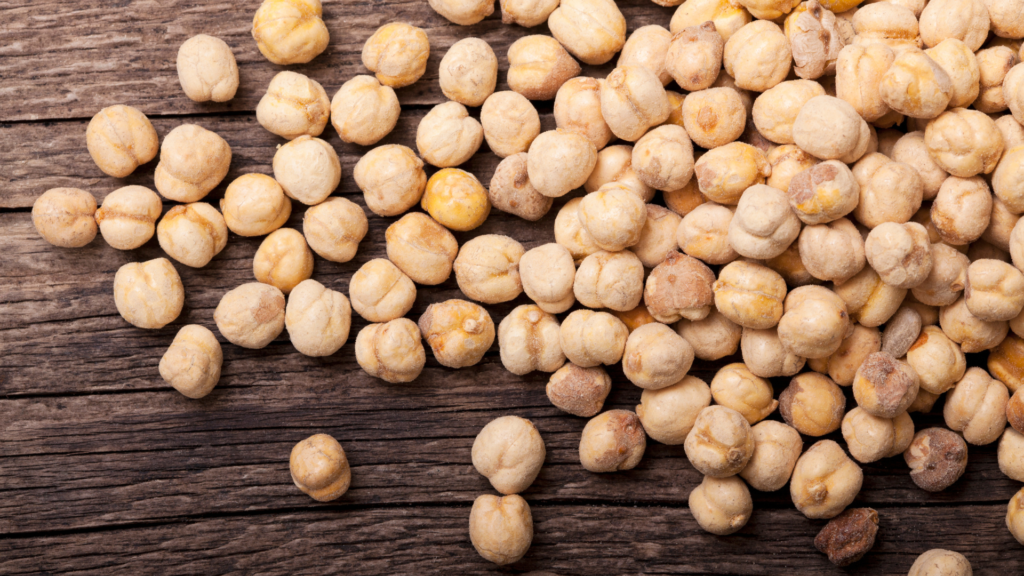
Chickpeas have evolved from a traditional staple crop into one of the most strategic pulse ingredients in modern food production. Chickpeas were once linked mainly to regional cuisines and household use. Today, they are a core raw material for industrial-scale food manufacturers. They are widely used in ready meals, snacks, bakery, plant-based, and functional nutrition segments.
Their success is not accidental. Chickpeas combine stable global supply and strong consumer acceptance. They also offer versatile processing options. They are available as whole, split, flour, and extruded flour. For procurement teams, this means lower sourcing risk and predictable costs. For R&D and production teams, it means functional flexibility, clean-label potential, and reliable performance across diverse applications.
In 2026, chickpeas stand out as a proven, low-risk ingredient in the global food industry. They align with established plant-based innovation, gluten-free formulations, protein enrichment, and sustainability-driven sourcing strategies. They offer high utility across multiple applications.
Understanding how chickpeas are grown and processed is now essential for food companies. This knowledge supports the development of resilient, future-ready food portfolios.
What Are Chickpeas? Origins, Varieties & Historical Relevance
Chickpeas (Cicer arietinum) are among the oldest cultivated legumes in human history. Archaeological evidence traces their domestication to over 7,000 years ago. Their origins lie in the Fertile Crescent in the Middle East. From there, chickpeas spread across the Mediterranean and South Asia. They later reached Europe, the Americas, and Australia. Today, chickpeas are a foundational crop in many food cultures.
Kabuli vs Desi Chickpeas – Key Industrial Differences
Modern chickpea production is dominated by two main types, each with distinct industrial relevance:
Kabuli chickpeas
- Larger size, rounder shape, light beige color
- Mild, neutral flavor and smoother texture
- Preferred for hummus, canned products, ready meals, snacks, and flour
- Dominant in Europe, North America, Australia, and the Mediterranean
Desi chickpeas
- Smaller, darker, thicker seed coat
- Stronger flavor and higher fiber content
- Widely used in South Asia for dals, flours, and traditional dishes
- More common in India, Pakistan, and parts of Africa
For industrial food manufacturers targeting Western markets, Kabuli chickpeas are the primary commercial standard. This is due to their sensory profile, processing consistency, and broad consumer acceptance.
Agronomic Characteristics Relevant to Food Supply Chains
From an agricultural standpoint, chickpeas offer several traits that support long-term sourcing stability:
- High drought tolerance compared to many protein crops
- Relatively short growing cycle
- Ability to thrive in semi-arid climates
- Compatibility with crop rotation systems
These characteristics improve chickpeas’ resilience to climate variability. This is a growing concern for procurement teams planning multi-year supply strategies.
Industrial Varieties and Performance
Different chickpea varieties are selected not only for yield, but also for:
- Seed size uniformity
- Hydration behavior
- Cooking time
- Milling performance for flour and extruded products
For industrial buyers, variety selection directly affects processing efficiency, product consistency, and cost control. This makes chickpeas far more than a generic commodity.
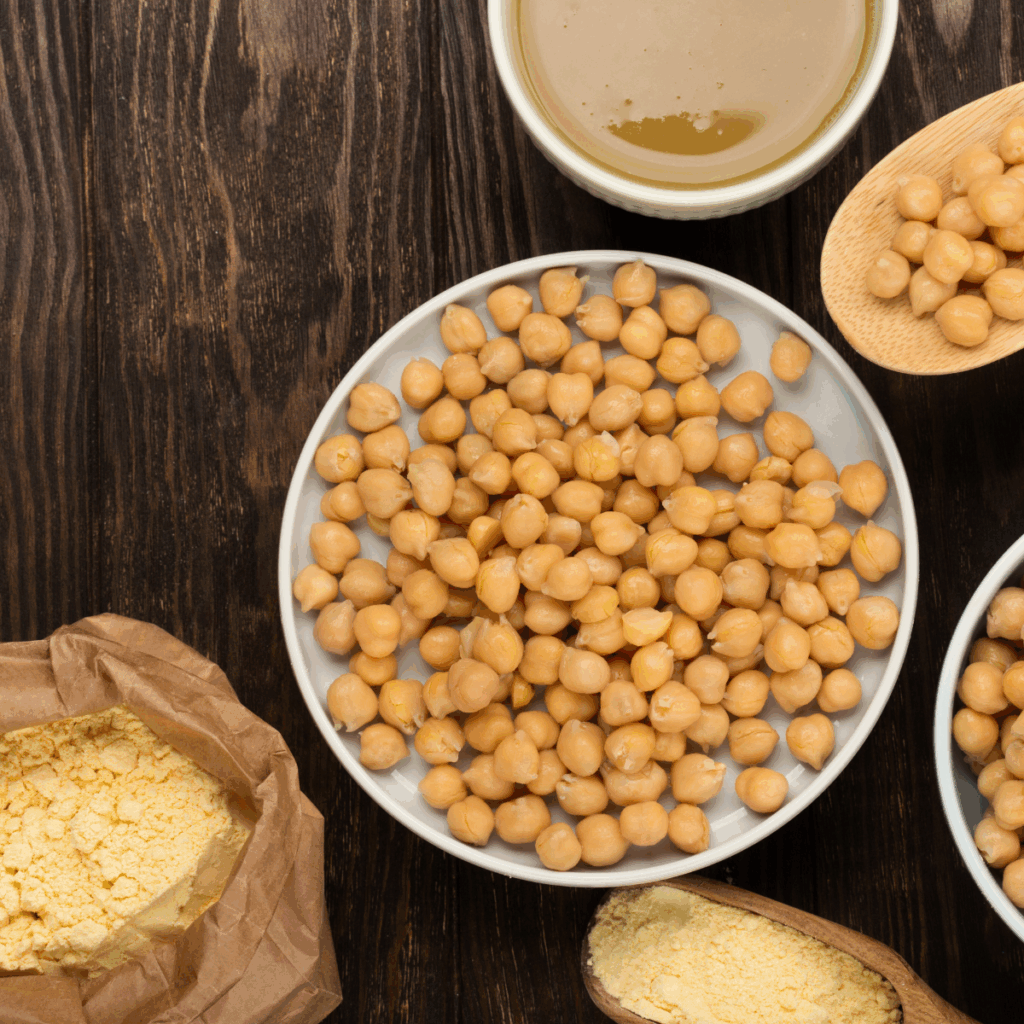
Global Production & Demand: Where Chickpeas Are Grown, Processed, and Consumed
Chickpeas are a truly global crop, cultivated across more than 50 countries and traded internationally at industrial scale. However, global supply comes from a relatively small group of producing and exporting regions. Each region has distinct characteristics relevant to food manufacturers and importers.
Top Producing Countries
Global chickpea production is led by five key countries:
- India – the world’s largest producer and consumer, dominated by Desi varieties and primarily serving domestic demand
- Australia – a major exporter of Kabuli chickpeas, known for consistent quality and export-oriented production
- Turkey – strong regional supplier with growing relevance for Europe and the Middle East
- Russia – expanding acreage and export volumes, especially toward Eastern Europe and MENA
- Canada – high-quality, food-grade chickpeas with strong compliance and traceability standards
India dominates global production volumes. However, most internationally traded chickpeas for industrial use come from Australia, Canada, and Turkey.
Export and Import Flows
From a trade perspective, the chickpea market is structured around a clear exporter–importer dynamic:
- Key exporting countries: Australia, Canada, Turkey, Mexico, Russia
- Major importing regions:
- European Union (food manufacturing, gluten-free, plant-based)
- United States (hummus, snacks, RTE meals)
- Brazil and Latin America (traditional food and growing processing sector)
- Middle East (high per-capita consumption and foodservice demand)
This diversified demand base reduces dependency on any single region and contributes to relatively stable global trade flows.
Consumption Patterns: Traditional vs Industrial
Historically, chickpeas were consumed mainly in traditional cuisines — South Asian, Middle Eastern, and Mediterranean. Today, industrial demand is the main growth driver:
- ready meals and canned foods
- plant-based and gluten-free products
- protein-enriched snacks and bakery
- instant and convenience formats
This shift toward industrial processing drives rising demand for chickpea flour. Demand for extruded chickpea flour is also growing faster than for whole chickpeas.
Demand Growth Drivers
Global demand continues to rise due to:
- plant-based food expansion
- clean-label reformulation
- gluten-free product development
- consumer preference for recognizable, minimally processed ingredients
Compared to lentils and peas, chickpeas benefit from broader culinary acceptance. They also face fewer sensory barriers, which supports stronger and more diversified demand growth.
Related articles: Chickpeas Market Update – November 2023
Whole Chickpeas – Traditional Uses and Industrial-Scale Applications
Whole chickpeas remain the most traditional and widely recognized form of this raw material. They also play a crucial role in modern industrial food production. For manufacturers, their value lies in predictable hydration behavior, controlled cooking time, and stable texture after thermal processing. These characteristics make whole chickpeas a reliable base ingredient. They are widely used where consistency and visual quality are critical.
In industrial settings, whole chickpeas are most commonly used in hummus, canned products, and ready-to-eat meals such as curries, stews, and Mediterranean-style dishes. In these applications, kernel integrity directly affects both processing efficiency and final product quality. Uniform size grading and low defect levels support even cooking. They reduce process losses and help maintain consistent texture across large production batches.
Whole chickpeas are also increasingly popular in the snack segment, particularly in roasted and puffed formats. As a clean-label alternative to nuts or fried snacks, they offer a natural appearance, high protein content, and appealing crunch. For snack manufacturers, the challenge lies in balancing roasting parameters with moisture control to achieve the desired texture without compromising shelf life.
From a quality perspective, whole chickpeas used in industrial food production must meet strict specifications. Parameters such as size uniformity, hydration ratio, defect percentage, and post-cooking firmness are closely monitored. This ensures predictable performance on high-throughput production lines. Even minor deviations can cause uneven cooking and texture inconsistencies. They can also reduce yield and increase production costs.
Beyond functionality, whole chickpeas also carry strong consumer appeal. Their recognizable form supports clean-label positioning and reinforces perceptions of naturalness and minimal processing. For many brands, this combination makes whole chickpeas a strategic ingredient. It combines technical reliability with positive consumer perception. This remains true even as more processed formats grow in popularity.
Split Chickpeas – Faster Cooking, Lower Energy Use and Process Contro
Split chickpeas are chosen primarily for one reason: efficiency. By removing part of the seed structure, this format significantly shortens hydration and cooking time compared to whole chickpeas. For industrial producers operating at scale, small reductions in processing time create measurable savings. These include lower energy use, higher throughput, and reduced production costs.
In practice, split chickpeas are widely used in ready meals, frozen foods, soups, and instant products. Uniform cooking and smooth texture are essential in these applications.
Water absorption is faster and more predictable. This gives manufacturers tighter control over processing parameters. It also reduces the risk of undercooked or overprocessed batches.
This is particularly important in high-volume foodservice and convenience food production, where consistency across thousands of portions is critical.
From a procurement perspective, split chickpeas often support more stable production planning. Shorter thermal cycles mean lower gas or steam usage, which helps offset energy price volatility. For quality teams, however, split chickpeas require closer attention during handling and storage. The mechanically altered structure makes them more sensitive to breakage, color variation, and moisture fluctuations. Proper packaging, controlled humidity, and clear specifications for split ratio and defect limits are therefore essential.
Despite these additional handling considerations, split chickpeas offer one of the best performance-to-cost ratios among pulse ingredients. Their ability to streamline production makes them a strategic choice for manufacturers. Texture and nutritional value remain intact. This is especially important in RTE, instant, and frozen food categories.
Chickpea Flour – High-Protein, Naturally Gluten-Free and Technologically Versatile
Chickpea flour has become one of the most important pulse-based ingredients in modern food manufacturing. Its rise is driven by a unique combination of nutritional value, functional performance, and clean-label compatibility. Chickpea flour is naturally gluten-free and rich in protein and fiber. It allows producers to meet nutritional and regulatory requirements. This happens without relying on complex additive systems.
In bakery and gluten-free applications, chickpea flour improves structure, moisture retention, and nutritional density. Unlike many starch-heavy alternatives, it provides functional proteins. These proteins support dough stability and mouthfeel. This is especially important in wraps, flatbreads, and protein-enriched baked goods. Its mild, slightly nutty flavor integrates well into formulations. It does not dominate the sensory profile. This supports stronger consumer acceptance.
Beyond bakery, chickpea flour plays an increasingly important role in snacks, sauces, and ready-to-eat products. Its natural emulsifying and binding properties allow manufacturers to reduce or eliminate modified starches and synthetic stabilizers. In applications such as dressings, fillings, hummus powders, and savory snacks, chickpea flour supports texture and viscosity. It also helps keep ingredient lists short and transparent.
From a market perspective, chickpea flour is strong in Europe, North America, and India. Demand is driven by clean-label positioning, gluten-free growth, and plant-based innovation. For R&D teams, it offers formulation flexibility and predictable behavior across multiple applications. For procurement and quality teams, its value lies in consistent functional performance and scalable supply. It also aligns with long-term trends in sustainable and protein-rich food production.
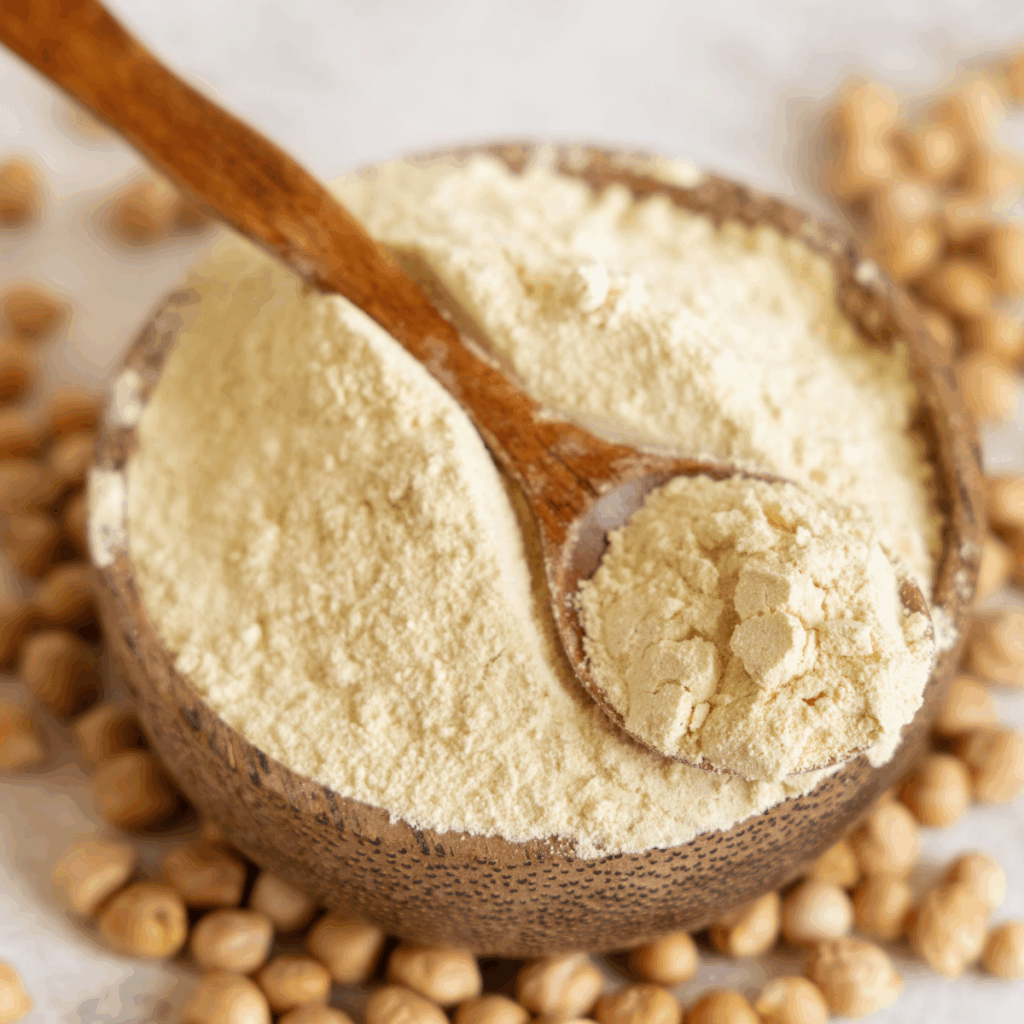
Extruded Chickpea Flour for High-Protein Foods
Extruded chickpea flour has become one of the fastest-growing pulse-based ingredients in recent years, Extruded chickpea flour represents the most technologically advanced form of chickpeas used in modern food manufacturing. Through extrusion, the raw material undergoes controlled thermal and mechanical treatment that partially gelatinizes starch, improves protein functionality, and significantly increases solubility. The result is an ingredient with predictable behavior, fast hydration, and improved nutritional accessibility.
This form of chickpeas is particularly valued in instant and high-protein applications, where performance consistency is critical. In soups, sauces, and ready-to-mix products, extruded chickpea flour disperses quickly without forming lumps, allowing manufacturers to achieve uniform texture with minimal processing time. This directly supports shorter production cycles, lower energy consumption, and improved process efficiency — all key priorities for large-scale operations.
In the snack sector, extruded chickpea flour has become a core raw material for protein-rich puffs, crisps, and extruded chips. Its stability under high-pressure extrusion and favorable expansion properties enable the creation of light, crispy textures while maintaining a clean ingredient declaration. Compared to standard flours, it offers greater control over density, mouthfeel, and final product structure, which is essential in the growing plant-based snacking category.
From an R&D perspective, extruded chickpea flour reduces formulation risk. Parameters such as viscosity, water absorption, and solubility are more stable than in untreated flours, simplifying scale-up from pilot to industrial production. The extrusion process also lowers antinutritional factors naturally present in pulses, improving digestibility and making the ingredient suitable for sensitive categories such as infant food, clinical nutrition, and functional meal replacements.
For procurement teams, this ingredient offers a rare combination of high functionality and operational reliability. Longer shelf stability, repeatable quality, and clear technical specifications support predictable sourcing and long-term planning. When combined with its naturally gluten-free profile, high protein content, and clean-label positioning, extruded chickpea flour emerges as a strategic ingredient for manufacturers developing next-generation food products focused on convenience, nutrition, and sustainability.
Check out our Marketplace
Organic Chickpeas and Sourcing Challenges
Organic chickpeas have moved from a niche ingredient into a strategic category for food manufacturers focused on clean label, transparency, and premium positioning. Demand is growing steadily across Western Europe and North America, driven not only by consumer expectations but also by retailer pressure and private label strategies that increasingly prioritise organic and minimally processed raw materials.
From a market perspective, the strongest demand for organic chickpeas comes from Germany, France, Italy, the Benelux countries, and the United States. These markets combine high consumption of plant-based foods with well-developed organic retail channels. For producers of hummus, ready meals, baby food, and plant-based snacks, organic chickpeas are no longer a differentiator — they are becoming a baseline requirement in selected categories.
However, sourcing organic chickpeas is structurally more complex than sourcing conventional volumes. Supply remains limited and more fragmented, while yields are lower and more sensitive to weather conditions. This creates higher price volatility and greater quality variation between seasons. For buyers, the main challenges are not availability alone, but consistency: stable moisture levels, predictable sizing, low defect rates, and reliable microbiological parameters are harder to achieve in organic supply chains.
Certification adds another layer of complexity. Organic chickpeas must comply with EU or USDA organic standards, but certification alone does not guarantee suitability for industrial processing. Differences in cleaning, sorting, storage, and handling can significantly affect performance in production. As a result, many manufacturers are shifting away from spot purchasing and moving toward contract-based sourcing or long-term supplier relationships that allow for better planning and quality alignment.
This is where transparency in the supply chain becomes critical. Traceability, verified documentation, pre-shipment sampling, and clear COA specifications help reduce risk and protect production continuity. For manufacturers, organic chickpeas make sense only when quality, certification, and logistics are aligned — otherwise, the cost of disruptions quickly outweighs the marketing benefits of the organic label.
In practice, organic chickpeas work best for companies that treat them not as a commodity, but as a strategic raw material. With the right sourcing model, they support clean label claims, strengthen ESG narratives, and open access to premium retail and foodservice channels — without compromising operational stability.
Chickpeas in R&D and Innovation – From Traditional Recipes to Functional Protein Snacks
For R&D teams, chickpeas have become one of the most flexible and predictable pulse ingredients available today. Unlike many plant-based raw materials that require heavy processing or flavour masking, chickpeas offer a neutral sensory profile, stable functional behaviour, and broad formulation tolerance. This combination makes them particularly attractive in both incremental product upgrades and completely new concept development.
In traditional applications, chickpeas remain the backbone of products such as falafel, spreads, and hummus-based recipes. However, innovation increasingly happens beyond these classic formats. R&D teams now use chickpeas as a structural and nutritional base for protein-enriched snacks, gluten-free wraps, and ready-to-eat meals designed for modern consumption habits. Whole and split chickpeas provide texture and bite, while flour and extruded flour enable control over viscosity, binding, and protein delivery.
One of the strongest advantages of chickpeas in innovation projects is formulation predictability. Chickpea-based ingredients behave consistently across batches when quality parameters are well defined, which reduces reformulation cycles and accelerates time to market. This is particularly valuable in clean label development, where removing additives often increases technological risk. Chickpea flour and extruded chickpea flour can replace modified starches, emulsifiers, or texturising agents while keeping ingredient lists short and consumer-friendly.
In high-protein and functional snack development, chickpeas increasingly compete with pea-based solutions. While pea protein isolates often require flavour correction and complex processing, chickpea-based systems — especially extruded flours — offer better solubility, milder taste, and improved mouthfeel. This makes them suitable for protein bars, puffed snacks, instant meals, and even meal replacement products, where sensory acceptance is critical.
From an innovation strategy perspective, chickpeas also align well with long-term portfolio planning. They can be positioned as a natural protein source, a gluten-free base, or a sustainable pulse ingredient, depending on the target market. This versatility allows R&D teams to reuse the same raw material across multiple product lines, simplifying sourcing and reducing operational complexity.
In practice, chickpeas enable R&D teams to innovate with lower risk. They support faster prototyping, more stable scale-up, and better alignment between nutrition, functionality, and consumer expectations. As a result, chickpeas are no longer just a traditional ingredient — they are becoming a platform for future-ready food innovation.
Chickpeas and Sustainability – Why Chickpeas Support Regenerative Agriculture
Sustainability is no longer an optional topic in food production. For many manufacturers, it has become a core criterion in raw material selection, driven by ESG strategies, retailer requirements, and growing consumer expectations. In this context, chickpeas stand out as one of the most naturally sustainable pulse crops available to the food industry.
From an agronomic perspective, chickpeas require significantly less water than many other protein crops. Their ability to grow in semi-arid conditions makes them less dependent on intensive irrigation, which is a critical advantage in a world facing increasing water scarcity. This contributes directly to supply stability and reduces environmental pressure in key growing regions.
Chickpeas also play an important role in regenerative agriculture. As a legume, the crop fixes atmospheric nitrogen into the soil, reducing the need for synthetic fertilizers in crop rotation systems. This improves soil structure, supports biodiversity, and lowers overall greenhouse gas emissions associated with agricultural inputs. For food producers, this translates into a raw material that naturally aligns with low-input and soil-friendly farming models.
Another key sustainability advantage lies in the efficiency of resource use. Chickpeas are a near zero-waste crop. Whole kernels, splits, flours, extruded flours, protein fractions, and fiber by-products can all be valorized in different food applications. This high conversion rate makes chickpeas particularly attractive for manufacturers focused on waste reduction and circular economy principles.
When evaluated per kilogram of protein, chickpeas also show a relatively low carbon footprint compared to many other plant protein sources. This positions them well within climate-focused sourcing strategies, especially for companies aiming to reduce Scope 3 emissions across their supply chains.
Importantly, sustainability in chickpeas is not only theoretical. It can be measured, documented, and communicated. For manufacturers, this means chickpeas can support credible sustainability claims without relying on complex processing or artificial enhancement. When sourced through transparent and well-controlled supply chains, chickpeas become a practical tool for building cleaner labels, more resilient portfolios, and stronger ESG narratives.
In short, chickpeas offer a rare combination of agricultural resilience, environmental efficiency, and industrial versatility. This makes them not just a sustainable ingredient, but a strategically responsible choice for food portfolios looking beyond short-term trends and toward long-term impact.
Market Forecast 2025–2030: How Chickpeas Compare to Lentils, Peas, and Beans
Looking ahead to 2025–2030, chickpeas are expected to remain one of the most resilient and fastest-growing categories within the global pulses market. While lentils, peas, and beans continue to play an important role in food production, chickpeas increasingly stand out due to their balanced combination of functionality, consumer acceptance, and supply stability.
One of the key drivers behind this growth is the diversification of demand. Chickpeas are no longer limited to traditional cuisines or single product categories. They are simultaneously expanding in ready meals, snacks, gluten-free bakery, plant-based foods, and high-protein applications. This multi-segment demand reduces dependency on any single market and makes chickpeas less vulnerable to short-term trend shifts.
Compared to peas and lentils, chickpeas show stronger momentum in value-added formats such as flours, extruded ingredients, and functional blends. While pea protein remains dominant in highly processed meat analogues, chickpeas are gaining ground in cleaner-label formulations where taste, texture, and ingredient transparency matter more than maximum protein isolation.
From a pricing perspective, chickpeas are also expected to maintain relatively stable dynamics over the next years. Although seasonal fluctuations will remain part of the market, global production is geographically diversified enough to limit extreme volatility. For food manufacturers and importers, this translates into better predictability when planning medium- and long-term sourcing strategies.
Demand growth is particularly visible in Europe and North America, driven by clean-label, gluten-free, and convenience food segments. At the same time, traditional consumption regions in the Middle East, South Asia, and parts of Africa continue to absorb large volumes, providing a stable baseline demand that supports the overall market. This dual structure — strong traditional consumption combined with industrial growth — is a major reason why chickpeas outperform many other pulses in long-term forecasts.
In contrast, other pulses such as lentils and dry beans tend to be more application-specific and regionally concentrated. This makes their demand cycles more sensitive to local trends, crop yields, and price competition. Chickpeas, by comparison, benefit from broader culinary relevance and stronger innovation pipelines, especially in processed and functional food categories.
Overall, the outlook for chickpeas between 2025 and 2030 is defined by steady growth rather than speculative spikes. For manufacturers, this means chickpeas represent a low-risk, high-utility raw material that fits both current product portfolios and future innovation plans. For procurement teams, it offers a rare combination of market depth, sourcing flexibility, and long-term relevance across multiple food categories.
Summary – Why Chickpeas Are a Strategic Raw Material for 2026 Food Portfolios
Chickpeas have evolved from a traditional pulse into a strategic ingredient for modern food manufacturing. Across all key formats — whole, split, chickpea flour, and extruded chickpea flour — they offer a rare combination of functional versatility, supply stability, and strong consumer acceptance.
For food producers, chickpeas offer predictable processing behaviour and neutral sensory properties. They also work across ready meals, snacks, bakery, and plant-based categories.
R&D teams use chickpeas to innovate with clean-label, gluten-free, and high-protein formulations. This happens without the complexity of heavily processed isolates.
From a procurement perspective, chickpeas are a comparatively low-risk raw material. They offer diversified sourcing options and more stable long-term pricing than many other pulses.
At the same time, chickpeas align naturally with sustainability and ESG goals. Their low water requirements, ability to fix nitrogen in the soil, and near-zero waste utilisation across the value chain make them well suited to future-focused food portfolios. This combination of environmental credibility and commercial practicality is increasingly decisive in sourcing and product development decisions.
Looking toward 2026 and beyond, chickpeas are positioned not as a niche ingredient, but as a core building block for food companies seeking resilience, flexibility, and long-term growth. Manufacturers that integrate chickpeas strategically — supported by clear specifications, reliable quality control, and experienced sourcing partners — gain both operational stability and a strong foundation for product innovation.
For companies building future-ready food portfolios, chickpeas are not just an option. They are a strategic advantage.
FAQ – Key Questions About Chickpeas in Food Manufacturing
1. What are the main forms of chickpeas used in the food industry?
In industrial food production, chickpeas are used primarily as whole chickpeas, split chickpeas, chickpea flour, and extruded chickpea flour. Each form serves different technological functions, from ready meals and snacks to bakery, instant products, and high-protein applications.
2. What is the difference between whole chickpeas and split chickpeas in processing?
Whole chickpeas are preferred where grain integrity and texture matter, such as canned products, hummus, or salads. Split chickpeas hydrate and cook faster, reducing processing time and energy consumption, which makes them ideal for soups, purees, ready meals, and foodservice applications.
3. Why is chickpea flour increasingly used in clean-label products?
Chickpea flour is naturally gluten-free, rich in protein and fiber, and has good binding and emulsifying properties. This allows manufacturers to reduce starches and food additives while maintaining texture and stability, supporting clean-label and simplified ingredient lists.
4. What advantages does extruded chickpea flour offer compared to standard flour?
Extruded chickpea flour provides higher solubility, improved digestibility, reduced antinutritional factors, and more predictable functionality. It performs especially well in instant soups, snacks, protein blends, and high-protein extruded products.
5. Are chickpeas suitable for gluten-free food production?
Yes. Chickpeas are naturally gluten-free and widely used in gluten-free bakery, snacks, wraps, and meal solutions. Their functional properties help compensate for the absence of gluten in doughs and batters.
6. Why are chickpeas considered a sustainable pulse?
Chickpeas require relatively low water input, improve soil health by fixing nitrogen, and generate a low carbon footprint per kilogram of protein. Nearly the entire crop can be utilized, minimizing waste across the value chain.
7. Which markets are driving global demand for chickpeas?
Demand is growing strongly in Europe, North America, and the Middle East, alongside traditional consumption regions in South Asia. Growth is driven by plant-based foods, ready meals, gluten-free products, and high-protein snacks.
8. What quality parameters are most important when sourcing chickpeas?
Key parameters include moisture content, size grading, defect levels, foreign matter, microbiological safety, and pesticide residues. For flours, granulation, solubility, viscosity, and functional performance are also critical.
9. Are chickpeas a low-risk raw material for food manufacturers?
Compared to many other pulses, chickpeas offer more stable pricing, diversified global supply, and broad application potential. This makes them a relatively low-risk ingredient when sourced with proper specifications and quality control.
10. How can food manufacturers secure consistent chickpea quality?
Consistency is achieved through clear specifications, COA verification, supplier audits, retained samples, and working with experienced sourcing partners who understand both agricultural variability and industrial processing requirements.
Source:
- https://pulsepod.globalpulses.com/pod-feed/post/the-rise-of-high-protein-early-maturity-climate-smart-chickpeas-how-wild-genes-are-redefining-performance-and-value
- https://foodnbeveragesprocessing.com/chickpea-and-its-exploration-in-the-food-industry/
- https://food.upm.edu.my/article/the_chickpea_revolution_how_a_sustainable_pulse_is_reshaping_the_global_dairy_alternative_market-88917
- https://www.fas.usda.gov/data/spotlight-global-chickpea-exports-rise
- https://www.mdpi.com/2304-8158/9/7/932
- https://www.bakingbusiness.com/articles/60703-functional-chickpea-flour-a-game-changer-for-extrusion