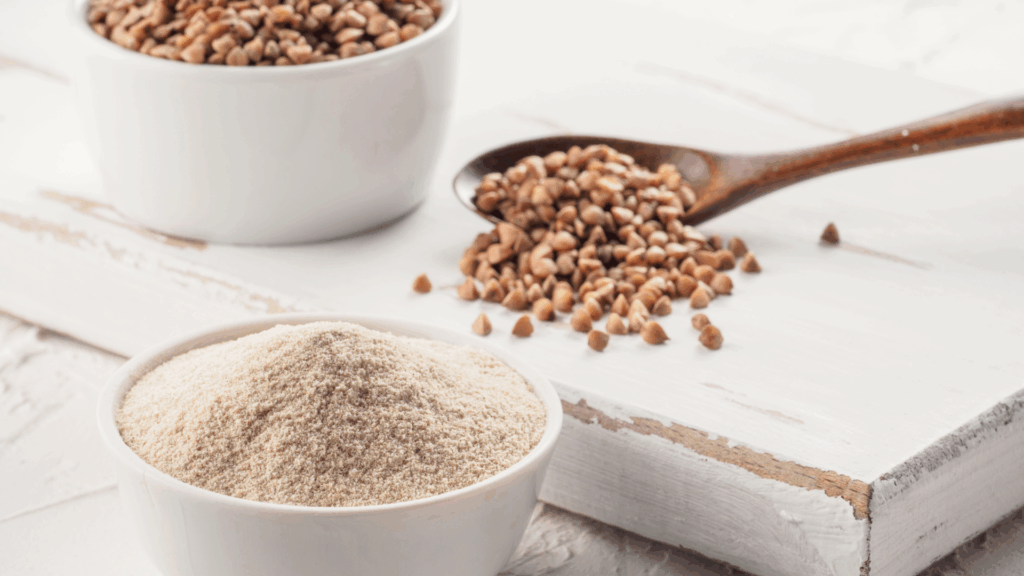
The buckwheat market in 2025 looks very different than in past years. Harvests are just ending, but the usual calm is missing. Instead of surplus, we see low stocks, uncertain volumes, and rising prices. Both conventional and organic markets feel the shift.
In this article, we focus on Poland and the Baltic region, with updates from Ukraine, Russia and China. We also zoom in on the organic buckwheat market, which is under stress. You’ll find real data, key trends, and clear signals on what’s ahead. This is the update that matters.
Buckwheat Market in Poland – 2025 Update
The 2025 buckwheat season in Poland reflects a clear contraction. This year, GUS (Statistical office) excluded buckwheat from its preliminary crop estimates, limiting access to verified national data. We expect final statistics by late December, once harvest declarations are processed.
Yields are also disappointing. The national average fell from 1.52 t/ha in 2024 to around 1.15 t/ha this season. These are early figures, based on feedback from dozens of farmers across Poland. Organic yields seem even lower often below 1.0 t/ha. Especially where harvests were delayed by September and October rains.
Conversations with farmers confirm what we suspected earlier in the season: most of them planted less buckwheat than in recent years. The economics simply didn’t add up. After three seasons of low prices and rising costs, many growers decided to reduce their buckwheat area.
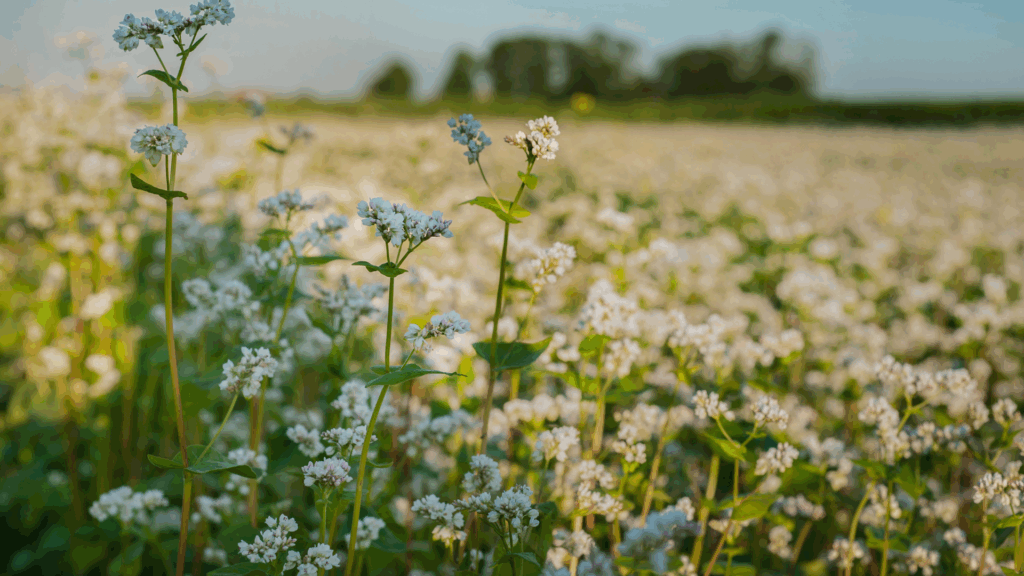
Many producers and traders bought buckwheat at unsustainably low prices over the past three years, trying to capitalize on oversupply. But like every time before, this leads to the same outcome: farmers back out, area shrinks, prices rebound. The buckwheat market remains one of the most cyclical in agriculture.
Over the last three weeks, raw buckwheat prices have increased by nearly €100/t across both types. This rally reflects not only weaker harvests in Poland, but also reduced availability from key origins like Kazakhstan and Russia. Buyers now face tighter supply, less room to negotiate, and higher costs ahead.
Buckwheat Production in Poland 2014-2024
| Year | Planted Area (1000 ha) | Production (1000 tons) | Yield (ton/ha) |
|---|---|---|---|
| 2014 | 62 | 82 | 1.33 |
| 2015 | 58 | 64 | 1.09 |
| 2016 | 82 | 118 | 1.44 |
| 2017 | 78 | 113 | 1.45 |
| 2018 | 78 | 94 | 1.20 |
| 2019 | 72 | 87 | 1.21 |
| 2020 | 68 | 94 | 1.43 |
| 2021 | 93 | 143 | 1.51 |
| 2022 | 114 | 176 | 1.55 |
| 2023 | 103 | 152 | 1.48 |
| 2024 | 93 | 142 | 1.52 |
Russia’s Buckwheat Sowing Down 32%
In 2025, Russia’s buckwheat acreage dropped to 746 400 hectares – the lowest in over two decades. That’s a one-third reduction compared to last year. Such a steep cut pushed harvest forecasts down to just ~900 000 tonnes. For reference, production stood at 1.2 million tonnes in 2024 and 1.47 million in 2023.
Yield per hectare has slightly improved, now averaging 1.34 t/ha. But the overall harvest still shrinks. In many key regions, harvest is ongoing. More than 300 000 tonnes have been collected so far, with final figures expected later in November. Russian prices have yet to react.
“We’re still processing last season’s stocks. But with a 35% drop looming, the reaction will come. First, processors will rush to secure volume. Then retail prices will go up. Finally, panic buying will start” – Russian economist says.
She projects an 8-12% price increase in H2 2025, followed by another 10-15% by early 2026. But that would only mark a return to fair pricing-not hyperinflation, just a correction after two years of market dumping.
At the same time, export priorities shifted. In Q1 2025, Russia shipped 110 000 tonnes of buckwheat abroad. A staggering 96% of that went to China. As local demand rises and surplus shrinks, countries like Poland are pushed to source elsewhere or pay more. Polish and Baltic processors are feeling the impact of tightened trade flows from the East.

Ukraine’s Buckwheat Future in Doubt After 2025 Drop
Ukraine’s 2025 buckwheat harvest reached only 96,000 tonnes -15% less than last year. Poor weather during key growth stages sharply lowered yields. Despite this drop, analysts believe the volume can still cover domestic demand.
Procurement prices at the farm level remain low, discouraging growers. Many farmers are shifting to more predictable crops like sunflower and corn. If buckwheat margins don’t improve soon, Ukraine risks further acreage loss in 2026.
“If farmers don’t see a fair return, buckwheat could disappear entirely from the fields” quote market analyst.
This trend reflects a broader cycle visible across all major buckwheat-producing countries. Periods of surplus and price drops, typically lasting three years, are often followed by sharp supply cuts and market corrections. When farmers lose confidence in buckwheat profitability, acreage collapses. Prices then rebound, but often too late to reverse planting decisions. Ukraine’s current situation is part of that familiar pattern.
Baltic Buckwheat Outlook: Less Grain, More Problems in 2025
In recent years, the Baltic states have grown into important players on the European buckwheat map. Several regional processors now serve both local and international demand with hulled buckwheat and groats. For Polish buyers especially, the Baltic raw material market remains highly relevant not just as a competitor, but also as a complementary source of raw material.
Among the Baltic countries, Estonia is the smallest buckwheat producer by far. Lithuania leads in total area, followed by Latvia, with Estonia consistently in third position. Despite differences in scale, all three countries faced a difficult 2025 season, shaped by heavy rainfall, lower yields, and reduced harvest volumes.
Lithuania: Weaker Yields Hit Buckwheat Market Hard in 2025
In 2025, Lithuania planted 37.9 thousand hectares of buckwheat – almost the same as last year. However, yields fell sharply this year. Farmers expect results closer to 0.80 t/ha, similar to 2023. In 2024, favorable weather supported higher yields of 1.00 t/ha and total output of 37.8 thousand tonnes. This year, too much rain during key stages limited grain development and harvest potential.
“Selling (Buckwheat) at €300/t, it’s not worth it” – comments Tautvydas Kropis.
He reduced sowing from 60 ha to 6 ha this season. Other farmers agree – rapeseed or peas offer better returns and less risk. Many report yields below 1 t/ha and rising input costs. The price needed to make buckwheat (conventional) viable, they say, is closer to €400/t. Low prices and unstable yields continue to push growers away from buckwheat.
Organic growers face similar issues. Quality concerns such as moisture and aflatoxins make post-harvest handling more complex. Yet demand remains: 2 800 tonnes of organic buckwheat were exported in first half of 2025, showing good export potential for this crop.
Latvia: Buckwheat Output Falls for Third Year in a Row
Latvia’s 2025 buckwheat harvest continues a downward trend now stretching into its third consecutive season. Production this year is forecast at just 12.6 thousand tonnes, down from 23.6 thousand tonnes in 2024 and 31.8 thousand tonnes in 2023 a nearly 60% drop in three years.
Interestingly, the 2024 season was considered successful thanks to dry conditions. In contrast, heavy rains in 2023 delayed harvests into November. The 2025 crop faces similar weather-driven challenges.
Sown area fell from 30 thousand hectares in 2023 to just 21 thousand hectares this season, with yields declining from 1.12 t/ha to 0.76 t/ha. Many Latvian farmers pointed to excessive rainfall before harvest as the main factor behind poor results. The wet conditions not only reduced yields but also caused high moisture levels in buckwheat, complicating drying and storage. Traders report poor grain quality and limited export potential.
Estonia: Buckwheat Struggles Amid Yield and Quality Issues
In 2025, Estonia planted around 7 158 hectares of buckwheat, slightly more than in 2024 and 2023. However, harvest forecasts show a sharp decline compared to the past two years. In 2023, Estonian growers harvested 19.3 thousand tonnes, increasing to 24.8 thousand tonnes in 2024 – the best result in recent history. But this year, expected volume drops by more than 50% to just 12.1 thousand tonnes.
Farmers cite repeated rainfall during flowering and harvest as the main reason for lower yields. Many anticipate average results well below 1.0 t/ha, in line with what’s happening in Latvia and Lithuania. Grain moisture, aflatoxin presence, and drying costs are pushing down quality and profitability.
Estonia has one of the highest proportions of organic farmland in Europe: 22.8% in 2025 but only a fraction is used for buckwheat. Organic growers this year report serious challenges, especially elevated phosphonic acid levels in organic batches. For buyers, this means fewer clean lots and more post-harvest risk.
Organic Buckwheat Production at Risk in 2025
The 2025 season brings an unusual development in the organic buckwheat market – tight supply is visible almost immediately after harvest. While product is still technically available, buyers can no longer rely on flexible sourcing or delayed decision-making, as they could in previous years. Across Poland and the Baltic states, volumes are visibly lower, and offers on the market are limited.
This is especially important because Russia and Kazakhstan contribute virtually nothing to the organic buckwheat market. As a result, domestic production in Poland, Lithuania, Latvia, and Estonia remains the backbone of supply. Unlike conventional buckwheat, organic buyers do not have import alternatives at scale. Those who secured contracts in October will be better positioned than those who waited.
Already, organic buckwheat prices have increased by around €100/t since the beginning of harvest. And that may only be the beginning. As demand picks up and volumes remain tight, further price increases appear likely. For many in the supply chain, this season may turn into a lesson on timing and risk management.
Buckwheat Market Summary
This season marks a decisive turn in the buckwheat market across Europe. Production dropped in nearly every major origin – Poland, the Baltics, Ukraine, and Russia. Lower yields, reduced acreage, and poor grain quality have pushed the market into tighter balance.
Organic buckwheat stands out as the biggest concern this season. Supply is tightening fast, and it’s happening much earlier than usual. Buyers who haven’t secured volume yet are already chasing limited offers at rising prices. We’re no longer in a market of oversupply and flexibility. This is a season that will reward speed, foresight, and trusted relationships – nothing less.
Source:
- “Заоблачные цены и пустые полки: неурожай гречки ударит по простым людям” available at:
https://atas.info/news/2025-10-08/zaoblachnye-tseny-i-pustye-polki-neurozhay-grechki-udarit-po-prostym-lyudyam-5487250 (accessed on October 30, 2025) - “В Украине дорожает гречка” available at:
https://news.telegraf.com.ua/jekonomika-i-finansy/2025-10-27/5924050-v-ukraini-dorozhchae-grechka-yakikh-tsin-ochikuvati-ta-do-chogo-tut-krupa-z-rosii (accessed on October 30, 2025) - “Grikiai-ar-verta-juos-auginti” available at:
https://ukininkopatarejas.lt/naujienos/grikiai-ar-verta-juos-auginti/ (accessed on October 30, 2025) - “Situācija nozarē” available at:
https://www.zm.gov.lv/lv/situacija-nozare?utm_source=https%3A%2F%2Fwww.google.com%2F (accessed on October 30, 2025)